Annual Meeting
Helpful Links
Financial Support Opportunities
Early Career Professional Reimbursements
We are proud to offer annual meeting registration and lodging reimbursements to up to 20 early career professionals! This reimbursement is intended to cover the cost of attendance for early career professionals that are not able to get registration and lodging covered by their employer. The reimbursement will cover both the registration fee and up to $1,000 in lodging expenses. To be considered, you must have attended school within the last 5 years and be an Oregon Chapter AFS member. Those selected will be provided a code to register online and will need to provide their hotel booking confirmation for the lodging reimbursement at the meeting. Reimbursements will be granted on a first-come, first-serve basis so get your application submitted ASAP!
To apply, email the following materials to the ORAFS Treasurer (treasurer@orafs.org):
• Contact information
• AFS membership number
• Documentation of most recent school enrollment
• A statement of lack of funding or financial support from your employer to attend the Annual Meeting
Registration Fee Assistance Waiver
With this waiver, the Chapter offers an opportunity for reduced registration ($100) to the Annual Meeting and/or a related workshop.
This waiver is intended to promote the attendance of professionals, students, and community members who require financial support to attend the Annual Meeting. Selection criteria will include financial need, dedication to the fisheries field (including AFS membership and service), reasons for attendance (e.g., presenting, networking), and available space at the meeting and/or workshop.
To apply, email the following materials to the ORAFS Treasurer (treasurer@orafs.org):
• Resume and contact information
• AFS membership number (if a member, but not required)
• Brief summary of your financial need
• Brief summary of your reasons for attending the annual meeting
• If employed, a statement of lack of funding or financial support from your employer to attend the Annual Meeting or that your work
is not fisheries-related.
Plenary Speakers
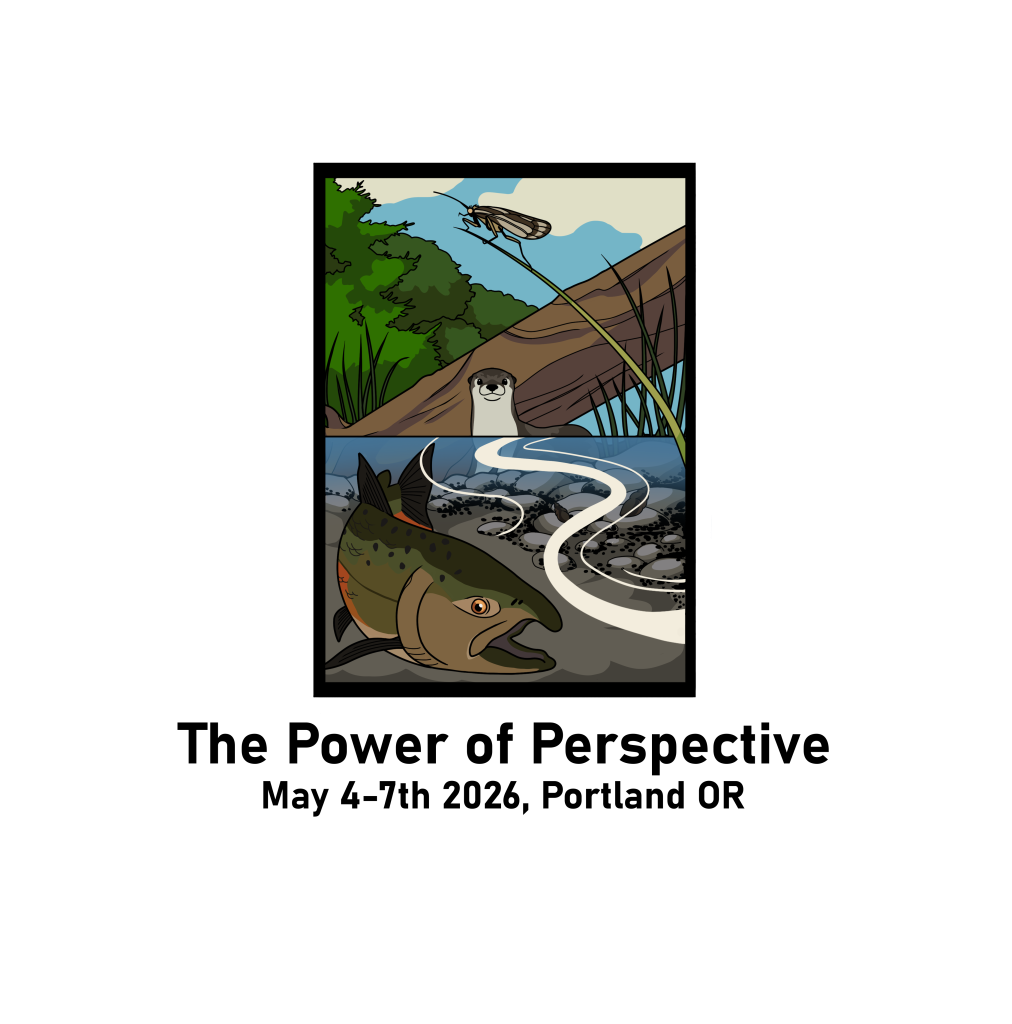
The central question in the meeting theme is, how do we harness the power of our unique perspectives to move the field forward and build resilience, relevance, and respect in fisheries and our profession? The plenary will be split into three sessions with four speakers to provide their thoughts and experiences. On Tuesday (May 5), Corinne Sams will speak to the collaborative work that the Columbia River Inter-tribal Fish Commission and its member tribes does throughout the Columbia River basin. She will describe the tribal management perspective and partnership through the formation of the 6 Sovereigns and the creation of the Columbia Basin Restoration Initiative. Next, Amy Bowers Cordalis will explore how Indigenous rights, cultural values, and ecosystem restoration can reshape policy, strengthen democracy, and deliver real climate solutions, based on her experiences with Klamath Basin restoration. Her message is one of resilience and hope: the water remembers, the fish remember, and together, we can renew the world. On Wednesday, Gary Whelan will address AFS’s perspective on the state of our profession and how to move forward, individually and collectively. On Thursday, Dr. Mamie Parker will speak about the importance of exploring the outdoors and the value of conservation and the environment from her perspective as the youngest daughter of an Arkansas sharecropper. The four plenary presentations will provide a starting point for conversations at the meeting and beyond.
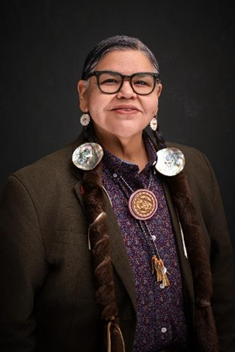
Corinne ("Cor") Sams
Cor Sams (Cayuse/Walla Walla/Cocopah) is an elected Board of Trustees Member for the Confederated Tribes of the Umatilla Indian Reservation (CTUIR) serving since 2019. She began her profession in youth advocacy working as a Title 6 Indian Education Coordinator in the Pendleton Public School System. Later went on to work for Portland State University as an Assistant Data Analyst in the Department of Social Work. This experience set the stage for Corinne to embrace her role within tribal government, social and public service in the tribal community as an advocate for the CTUIR and surrounding communities. Corinne is currently the Vice Chair of the CTUIR Law and Order Committee and the Chair of the Fish and Wildlife Commission, Secretary of the Columbia River Intertribal Fish Commission, and Chair of the Oregon State Tribal Consultation Task Force. In addition to her responsibilities as a Tribal Leader, Corinne is one of the advisors for the CTUIR Youth Council. Corinne was a 2024 recipient of the ECO Trust Indigenous Leadership Award. She is vigilant in protecting, and enhancing Treaty reserved rights. She is committed to restoring and protecting Salmon in the Columbia Basin. Corinne has fished most of her life on the Columbia River and tributaries, mainly scaffold/hook and line. As a fisher and commissioner, Corinne wants to ensure our resources, ecosystem, habitat, and aquatic species are maintained for those yet unborn. Her interests include spending time with her family, coaching all sports, hunting, camping, fishing, gathering first foods, and anything and everything to do with tribal people.
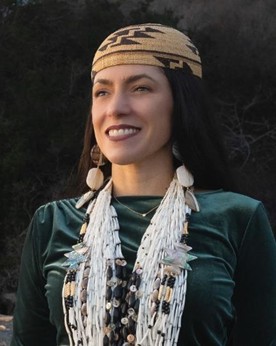
Amy Bowers Cordalis
Amy Bowers Cordalis is a mother, fisherwoman, attorney, and member and former General Counsel of the Yurok Nation—the largest Indigenous Nation in California. She is currently the cofounder and executive director of the Ridges to Riffles Indigenous Conservation Group, a nonprofit advancing Indigenous sovereignty through the protection of cultural and natural resources, including the undamming of the Klamath River. She is the recipient of the UN’s highest environmental honor, Champions of the World Laureate, and has been named to the second annual TIME100 Climate List (2024), featuring the one hundred most influential leaders driving business to real climate action. She is the author of The Water Remembers (Hachette, 2025).
Gary E. Whelan
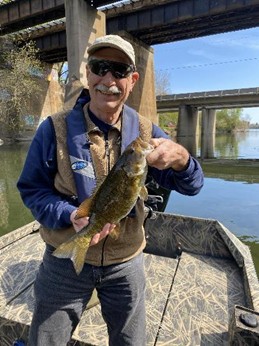
Gary Whelan is retired from Michigan Department of Natural Resources, Fisheries, and is the current AFS President. Gary has a B.S. from the University of Wyoming and a M.S. in fisheries management from the University of Missouri-Columbia. He worked for the Michigan DNR for over 35 years and prior to that for Michigan State University for almost 5 years. Recently, Gary retired from being the Research Program Manager for the Michigan DNR that also included fish health program oversight and involvement with the Great Lakes Fish Health Committee, habitat management consultation, and emergency response duties. He has been involved with the National Fish Habitat Partnership since 2004 as Board staff and as Co-Chair of the Board’s Science and Data Committee. He is President, a life member and Fellow of the American Fisheries Society. He has been involved in multiple Association of Fish and Wildlife Agencies committees on national fisheries issues and was the second President of the Instream Flow Council. While his educational training is as a stream ecologist, he has been blessed with a wonderfully diverse career that has ranged from studying fish pathogens to analyzing hydropower impacts statewide to examining fish habitat nationally to managing complex fisheries systems in Michigan.
Dr. Mamie Parker
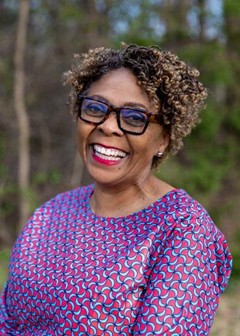
Mamie Parker is an international public speaker and Leadership coach. She has nearly three-decade career as a fish and wildlife biologist with the U.S. Fish and Wildlife Service (FWS) took her across the country, serving across the East and Midwest. In her role as co-chair of the Aquatic Nuisance Species (ANS) Task Force, she helped guide a federal intergovernmental initiative that focuses on preventing and controlling the introduction of invasive species in U.S. waters, coordinating efforts between government agencies, tribes, and industry to develop comprehensive management plans. Additionally, as FWS Head of Fisheries, Dr. Parker led the staff working with partners in the establishment of the National Fish Habitat Action Plan, which seeks to enhance and restore aquatic ecosystems through collaborative partnerships. Her exceptional leadership earned her the prestigious Fish and Wildlife Service’s Ira Gabrielson Leadership Award and the distinction of serving as an FWS Regional Director, Head of Fisheries, and Senior Executive Service member. Her duties included ecological impact assessment, private lands conservation, fisheries management, and aquaculture. Beyond her agency work, she spearheaded critical environmental initiatives that earned her the William P. Reilly Environmental Leadership Award and the Presidential Rank Award, the highest honor given to the top 1% of federal employees. She has an extensive amount of experience building bridges to nontraditional partners in the conservation community. This work resulted in her receiving the 2020 Association of Fish and Wildlife Agencies John L. Morris Lifetime Achievement Award, William P. Reilly Environmental Leadership Award and the Presidential Rank Award, the highest honor bestowed upon federal employees. Dr. Parker received the Emmaline Moore Award, named after the first female President of the American Fisheries Society, for mentoring and coaching women and people of color. Parker is one of the authors of The Future of Fisheries: Perspectives for Emerging Professionals published by the American Fisheries Society.